Wildfire Analysis for Maxwell Creek Watershed
2026 | Salt Spring Island, British Columbia
Protecting watersheds under increasing wildfire risk
As climate change accelerates wildfire risk across British Columbia, the protection of source water and ecologically sensitive watersheds is becoming a critical environmental priority. For communities that rely on surface water, wildfire can introduce long-term risks to water quality, ecosystem health, and infrastructure reliability.
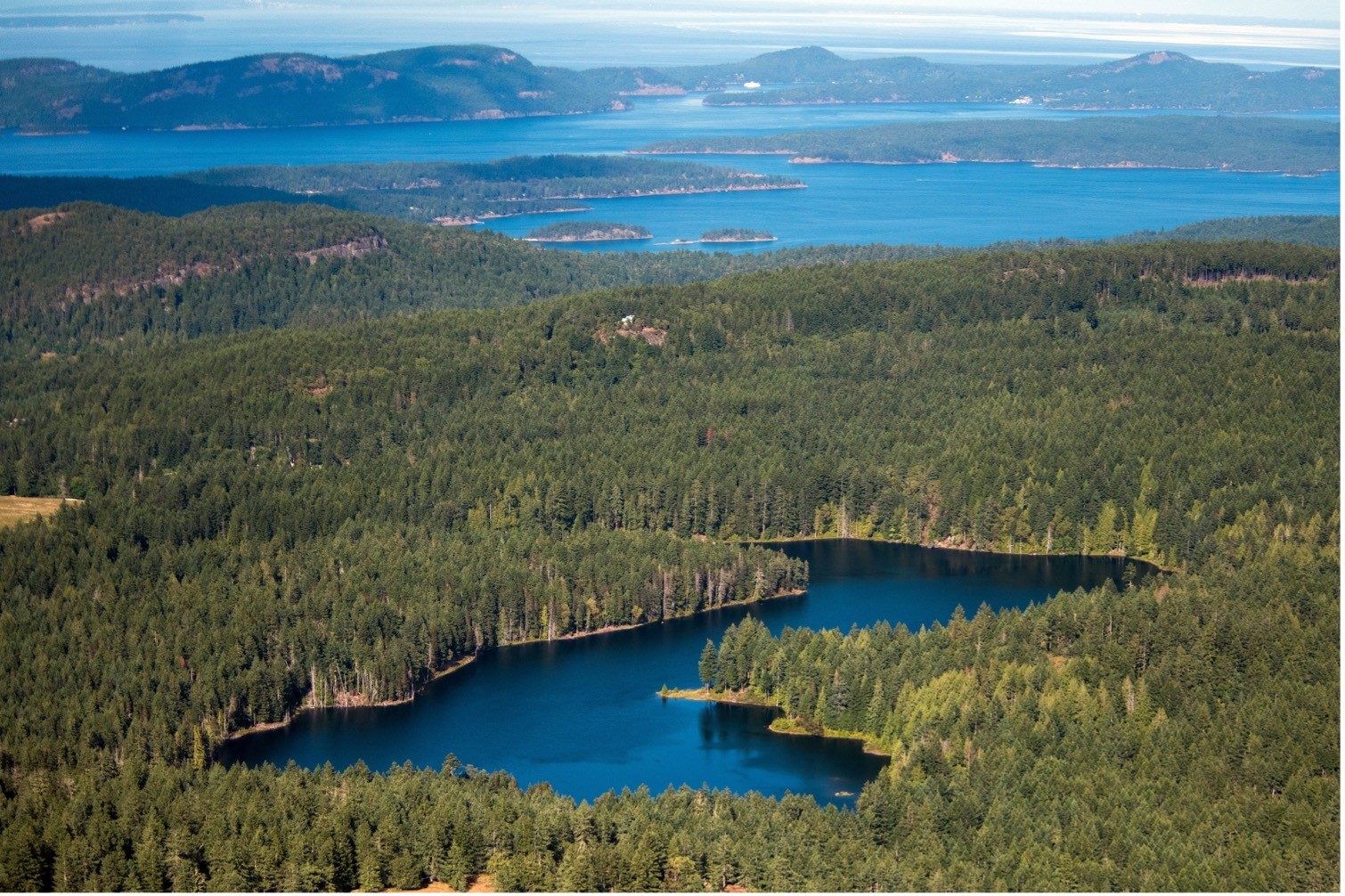
In 2026, the North Salt Spring Water Works District engaged McElhanney to complete a wildfire analysis for the Maxwell Creek watershed, a key source area connected to the proposed Maxwell Lake Water Treatment Plant. The project focused on understanding current and future wildfire risk and identifying practical mitigation options that support long-term watershed and drinking water resilience.
Integrating environmental science and climate projections
The project brought together McElhanney’s Environmental and Climate & Sustainability teams in a coordinated, watershed-scale assessment. The team’s professional foresters and biologists completed a comprehensive wildfire risk analysis that considered both existing ecological conditions and future climate influences. Methodologies included FireSmart assessment analyses of woody fuel and ignition risk.
The team integrated climate change projections into the assessment to better understand how wildfire likelihood and intensity may evolve over time. This approach allowed the team to move beyond a static risk snapshot and instead evaluate wildfire risk in the context of a changing climate, helping the client plan for longer-term environmental pressures on the watershed.
From risk assessment to actionable mitigation
Rather than stopping at risk identification, the study translated technical findings into practical, prioritized mitigation strategies tailored to the Maxwell Creek watershed. These recommendations were designed to reduce wildfire-related impacts on both the natural environment and essential water infrastructure, while respecting the sensitivity of the watershed.
Mitigation options included fuel management considerations and access-route risk reduction, along with clear implementation pathways aligned with applicable regulatory frameworks. The team also completed a funding opportunity review to help the Water Works District understand potential avenues to support future mitigation and resilience actions.
Reflecting on the program outcomes, District CAO Mark Boysen shared, “The wildfire risk assessment gave us a clearer picture of the risks the Maxwell Creek watershed is facing now and in the future. With these recommendations, we can plan ahead to protect this important drinking water source and build a stronger, more resilient watershed over time.”
Supporting resilient, environmentally responsible water systems
The outcome of the project was a clear set of actionable recommendations to enhance the long-term wildfire resilience of a critical drinking water watershed. By combining environmental expertise, climate forecasting, and implementation-focused thinking, the project supports informed decision-making that protects both ecosystem integrity and community water security.
This work reflects McElhanney’s broader commitment to environmentally responsible planning and climate-informed solutions that help communities adapt to increasing natural hazard risk while safeguarding the systems they depend on.
McElhanney provided:
- Wildfire risk assessment at the watershed scale
- FireSmart assessment for the new Maxwell Lake Water Treatment Plant
- Integration of climate change projections into wildfire risk analysis
- Environmental and ecological collaboration with foresters and biologists
- Identification and prioritization of wildfire mitigation options
- Fuel management and access-route risk considerations
- Funding opportunities review
- Translation of technical findings into decision-ready recommendations