Mowachaht Muchalaht First Nation Climate Change Risk and Vulnerability Assessment
2025-2026 | Mowachaht Muchalaht First Nation Territory | Gold River, BC
Climate Resilience Rooted in Place
For Mowachaht Muchalaht First Nation (MMFN), climate resilience is about more than protecting infrastructure. It is about protecting the lands, waters, cultural places and values, traditional knowledge, and relationships that have guided stewardship and sustained the Nation for generations.
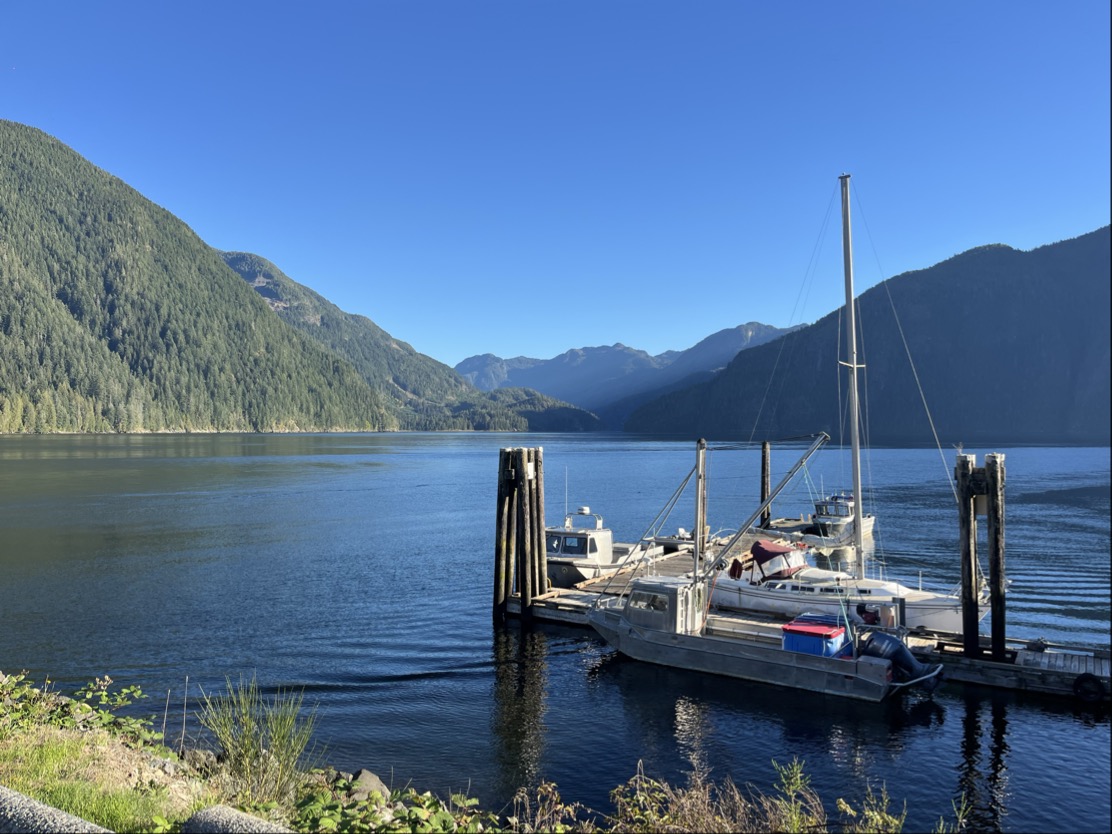
Located on the west coast of Vancouver Island, MMFN’s communities of Tsaxana, Yuquot, and Ahaminaquus are shaped by forests, rivers, shorelines, and the Pacific Ocean. As climate change accelerates, those places — and the salmon, wildlife, cultural sites, and community infrastructure connected to them — face growing pressures from wildfire, flooding, coastal erosion, and extreme weather.
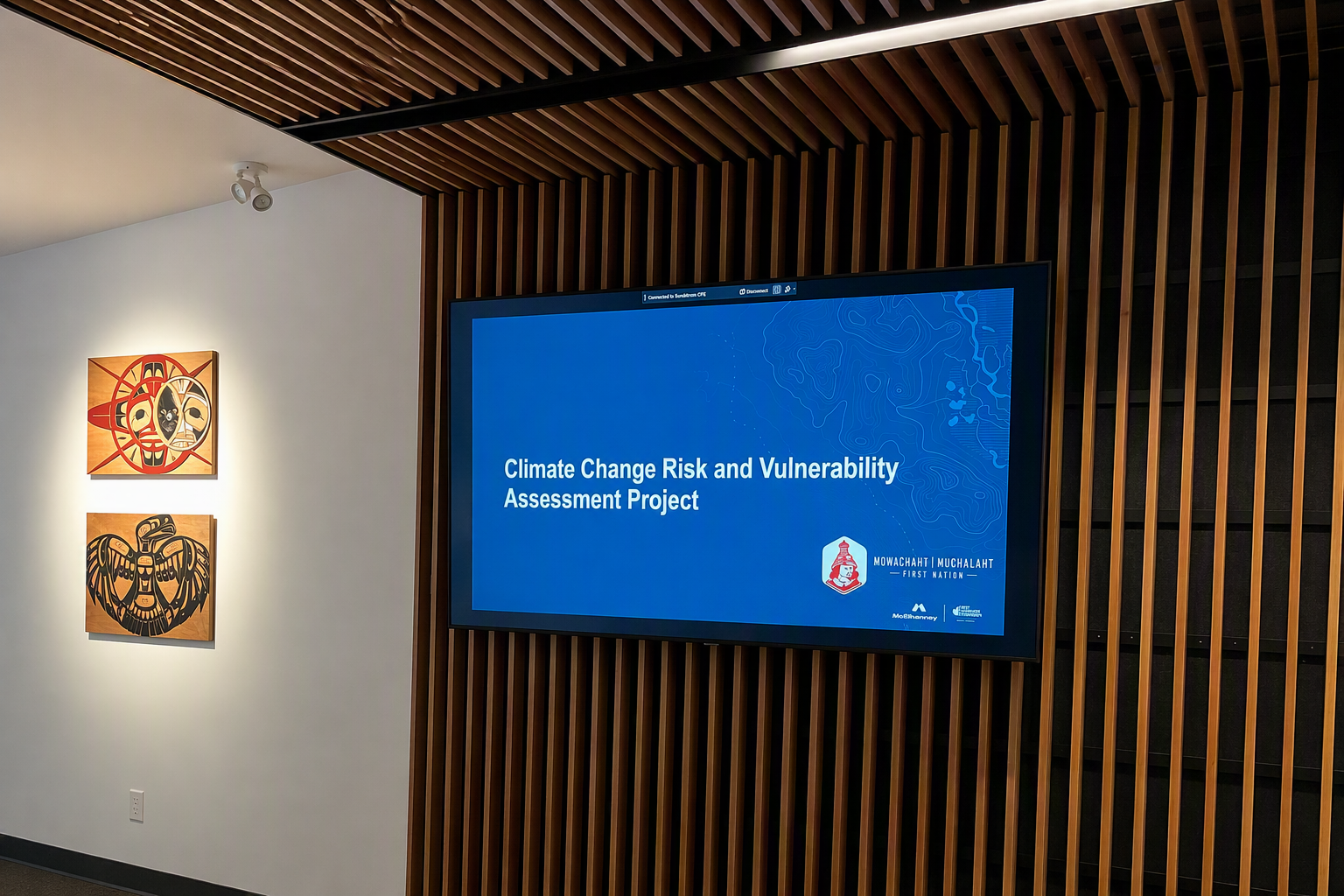
With the help of McElhanney, MMFN secured Disaster Resilience and Innovation Funding (DRIF) and then further partnered with McElhanney to complete a Climate Change Risk and Vulnerability Assessment (CCRVA). The goal was not simply to identify climate hazards, but to understand what matters most to the Nation and how those priorities can be protected for future generations.
Bringing Indigenous Knowledge and Climate Science Together
The project combined climate projections and engineering analysis with local and Indigenous Knowledge shared by Elders, community members, leadership, and staff through workshops, engagement sessions, and on-the-ground discussions.
Community members shared firsthand observations of climate-related impacts across MMFN lands, including flooding, wildfire risk, slope instability, coastal hazards, challenges with evacuation and emergency response, and impacts on culturally significant sites and community wellbeing, as well as tourism and local economic impacts.
Together, those perspectives created a richer understanding of climate risk, reflecting both scientific knowledge and the Nation’s relationship with the land.
The assessment also expanded the definition of what needed protection. Alongside roads, utilities, and community buildings, MMFN identified cultural sites, burial grounds, Whalers Shrine artifacts, and tourism assets as priorities for consideration. The result was a more holistic view of resilience that recognized cultural continuity, environmental stewardship, and community wellbeing alongside infrastructure performance.
Nation-Led Decision-Making
A defining feature of the project was MMFN’s role in shaping how risks were evaluated.
Working alongside Nation representatives, the project team developed criteria that considered social and cultural impacts alongside environmental and financial impacts. These conversations helped define what levels of risk were acceptable, what impacts would be most significant, and where adaptation efforts should be focused.
Community input also guided the adaptation planning process. After climate risks were identified, preliminary adaptation options were brought back to Elders, community members, and staff for review and prioritization.
Participants evaluated options based on what mattered most to the Nation, including cultural considerations, environmental impacts, effectiveness, costs, and long-term benefits. The process resulted in five priority adaptation actions focused on:
- Wildfire resilience
- Flooding
- Emergency preparedness
- Coastal protection, and
- Tsunami readiness
Building a Foundation for Future Generations
The completed CCRVA provides MMFN with a practical roadmap for strengthening resilience in the years ahead.
Priority recommendations include:
- FireSmart operations and maintenance in Tsaxana
- A drainage and flood risk study
- Updates to evacuation and communication planning
- A breakwater rehabilitation study for Yuquot, and
- Improvements to tsunami evacuation planning and warning systems
More importantly, the project established a framework for future decision-making. By bringing together Indigenous Knowledge, community priorities, and technical climate expertise, MMFN is better positioned to pursue funding, advance resilience initiatives, and protect the places, practices, and relationships that are central to the Nation’s future.
The project demonstrates how climate resilience planning can support First Nations and other governments alike: by starting with community priorities, listening carefully, and helping transform those priorities into actionable strategies for the future.
McElhanney provided:
- Climate Change Risk and Vulnerability Assessment (CCRVA)
- Climate data analysis and future climate projections
- Indigenous Knowledge engagement and integration
- Community and Elder engagement workshops
- Infrastructure and asset vulnerability assessment
- Consequence and risk analysis
- Climate adaptation planning
- Adaptation option evaluation and prioritization
- Emergency preparedness and resilience planning
- Funding readiness and implementation planning